GE Wall Oven in Tarpon Springs: Not the Oven, a Bad Breaker
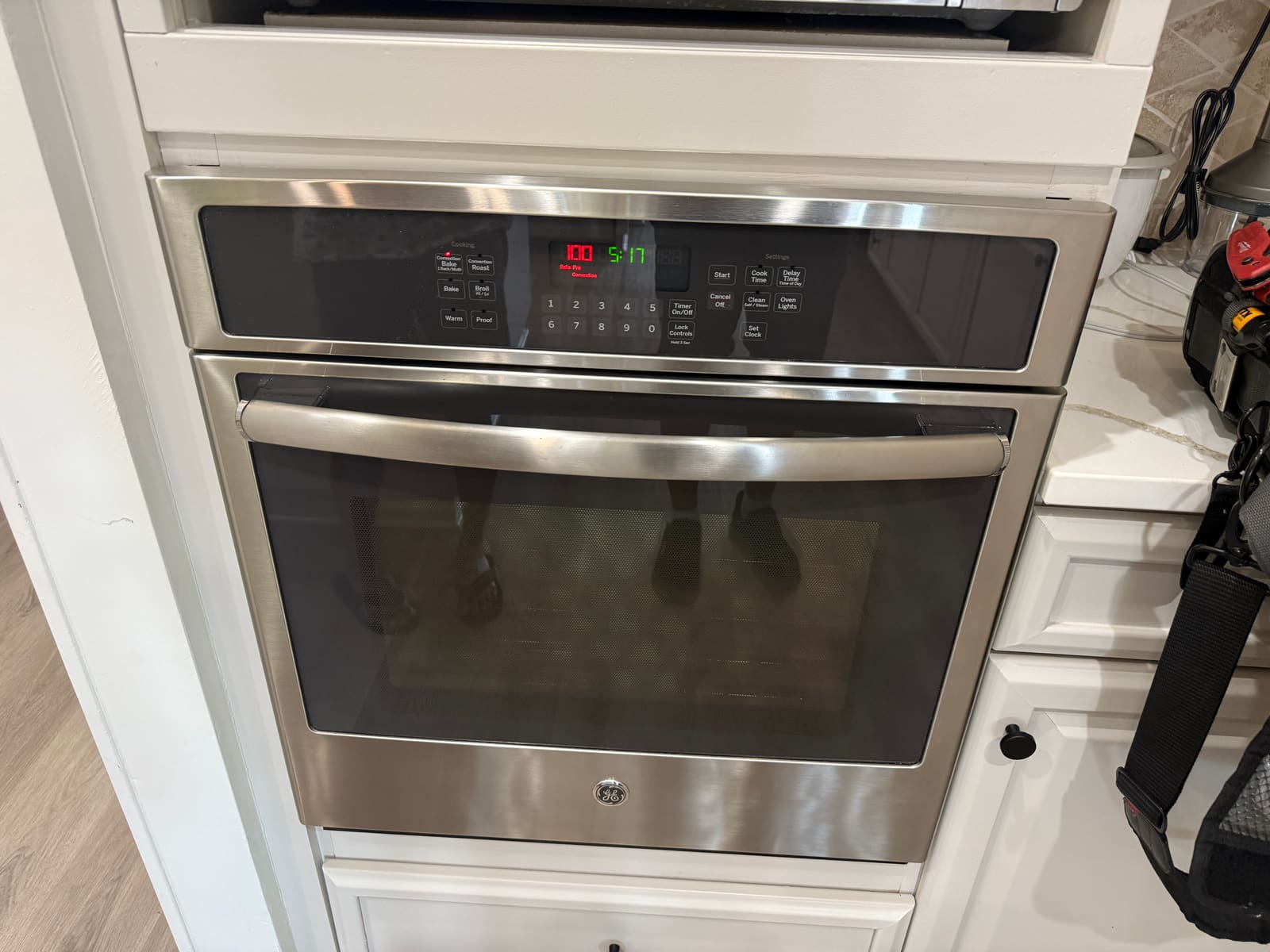
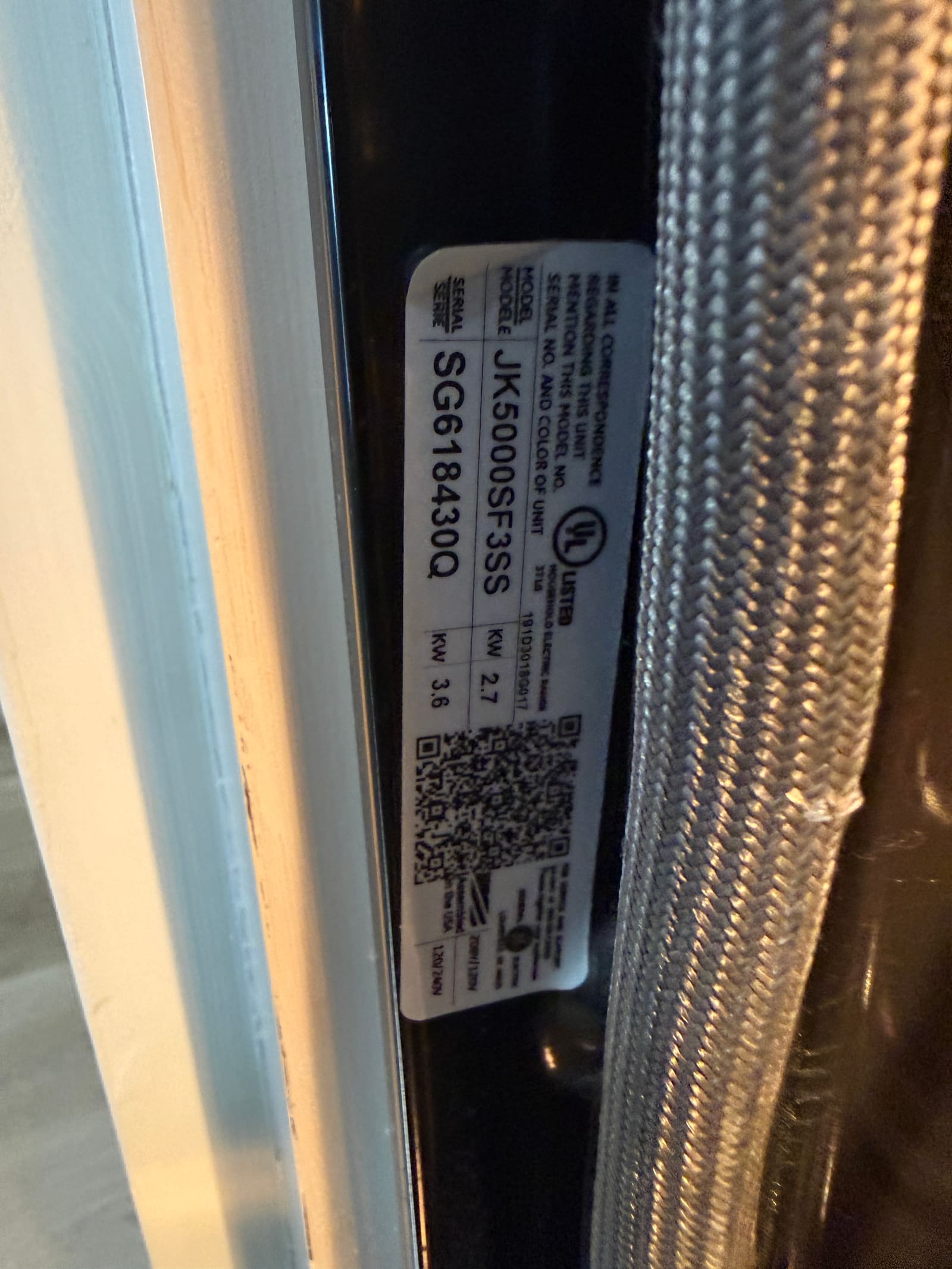
New homeowners in a house overlooking Lake Tarpon reached out on their realtor’s recommendation. They’d just closed on the place, and the GE wall oven (model JK5000SF3SS) wasn’t working — even though it had run fine during the inspection a couple of weeks earlier.
Ruling power in or out
First question was whether they’d had any power issues in the house. They said no, but the symptom looked enough like a power problem that it was worth checking directly rather than taking that at face value.
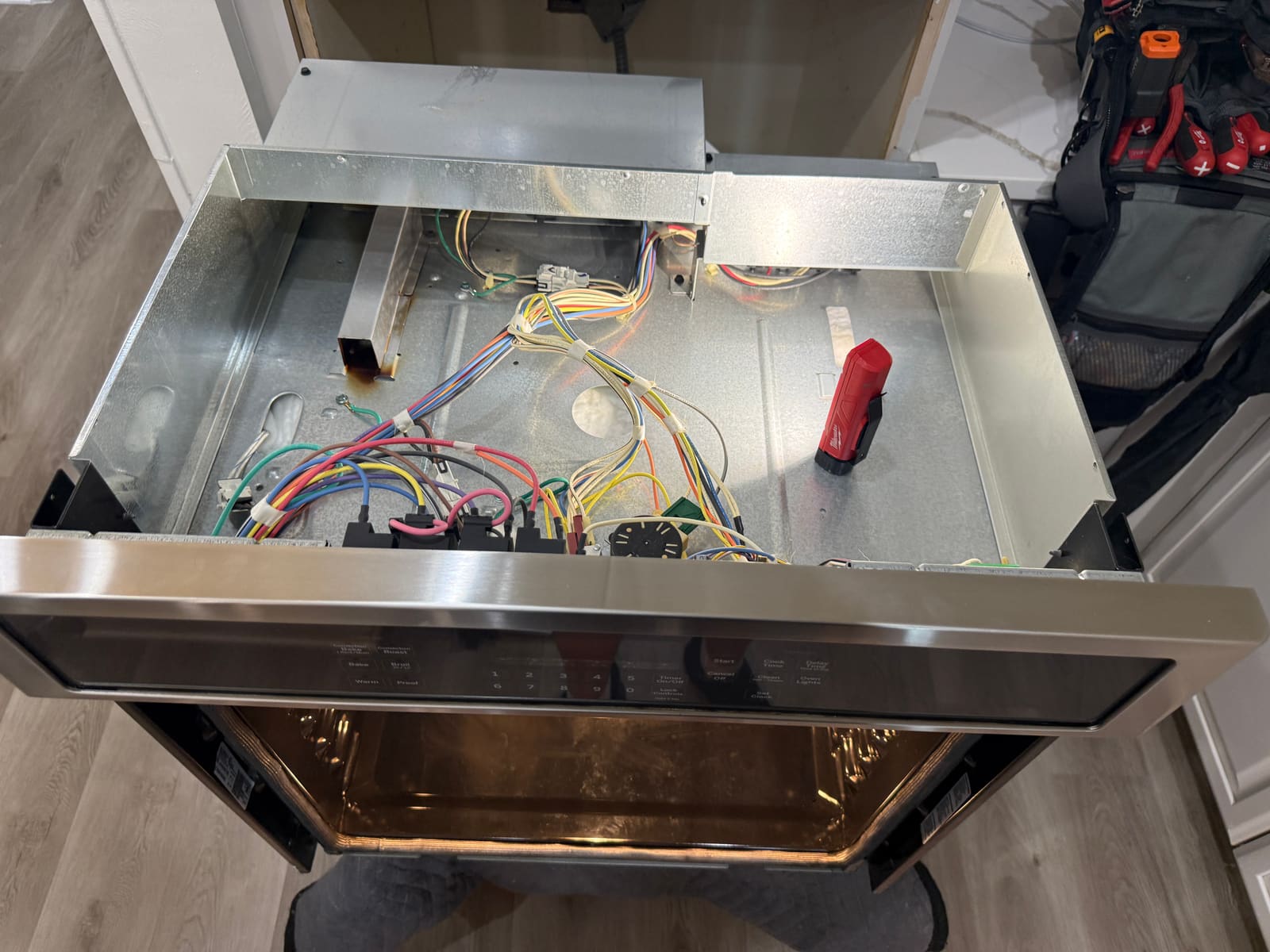
A wall oven like this runs on 240V, fed by two separate 120V legs. Checking the power at the oven, one leg read normal and the other read nothing at all — the circuit was only getting half of what it needed, which is exactly the kind of fault that leaves an oven completely dead.
An electrical problem, not an appliance one
A missing leg like this points upstream of the oven, into the house wiring and breaker panel — not something we open the oven up to fix. We recommended they get an electrician out to check the circuit.
They messaged back that evening: the electrician confirmed the same thing we’d found, one of the two 120V legs was dead, and traced it to a defective breaker feeding the wall oven circuit. Once that breaker was replaced, the oven had power again.
If a newer appliance suddenly stops working with no obvious cause, it’s worth checking the power feeding it before assuming the appliance itself has failed — see our oven repair page for what else we typically check.