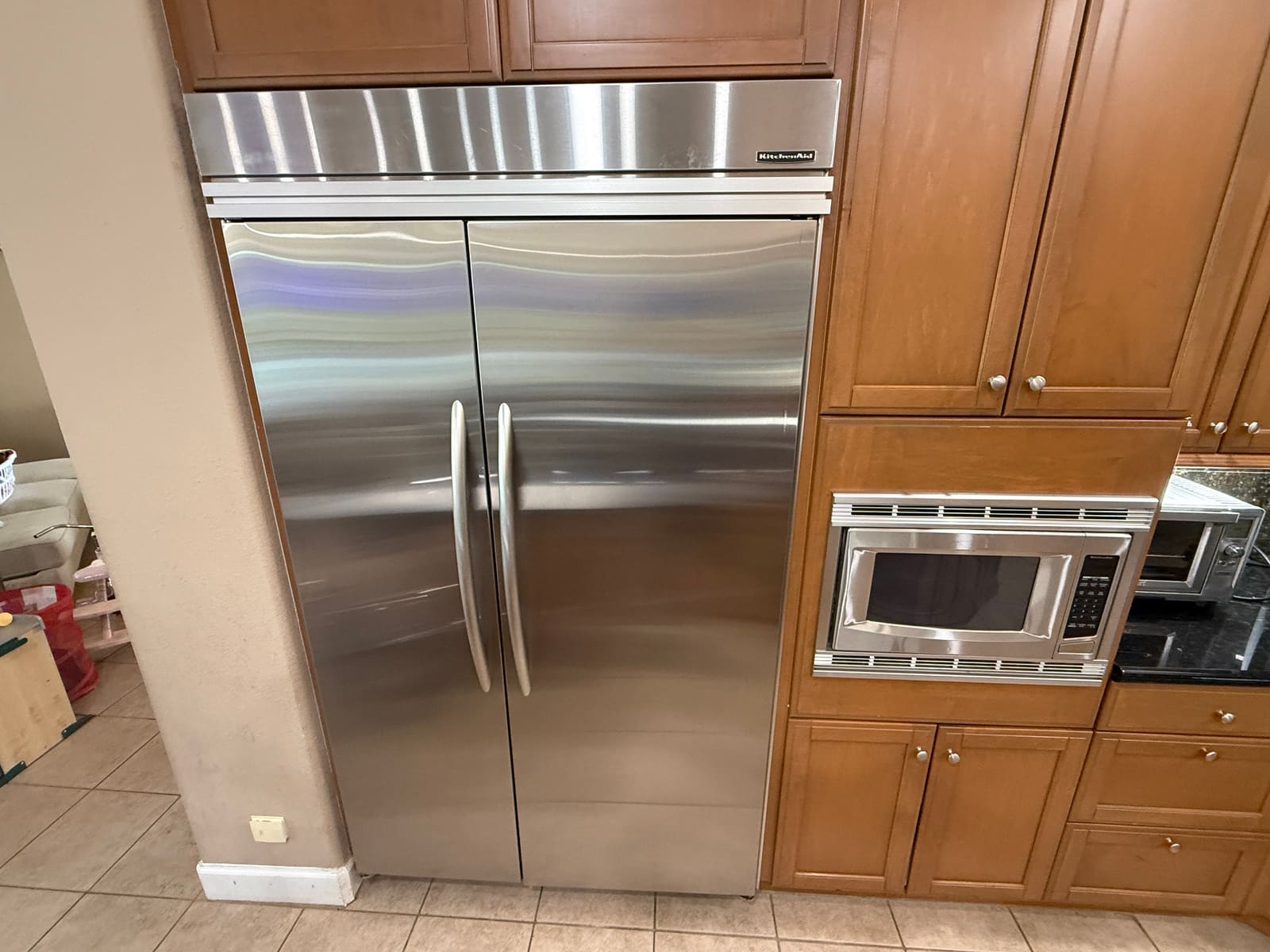
KitchenAid Built-In Refrigerator Not Cooling in Palm Harbor: An Evaporator Worn Through at the Defrost Heater
- Symptom
- Refrigerator stopped cooling, though the compressor, fans, and controls all worked.
- Cause
- Low system pressure — the evaporator wore through where it rubs against the defrost heater.
- Fix
- Brazed in a new evaporator, leak-checked, evacuated, and recharged; cleaned the condenser and lubricated the doors.
A client in Palm Harbor called about their KitchenAid built-in side-by-side refrigerator — it had stopped cooling. This unit is more than 20 years old, built into the cabinetry the way these premium KitchenAid models are designed to be.
Everything worked — except the cooling
The first step was checking all the functional parts: the compressor was running, the fans were spinning, the controls were responding. On paper, everything was doing its job. But the evaporator coil itself wasn’t getting cold — which moves the problem out of the electrical side and into the sealed system.
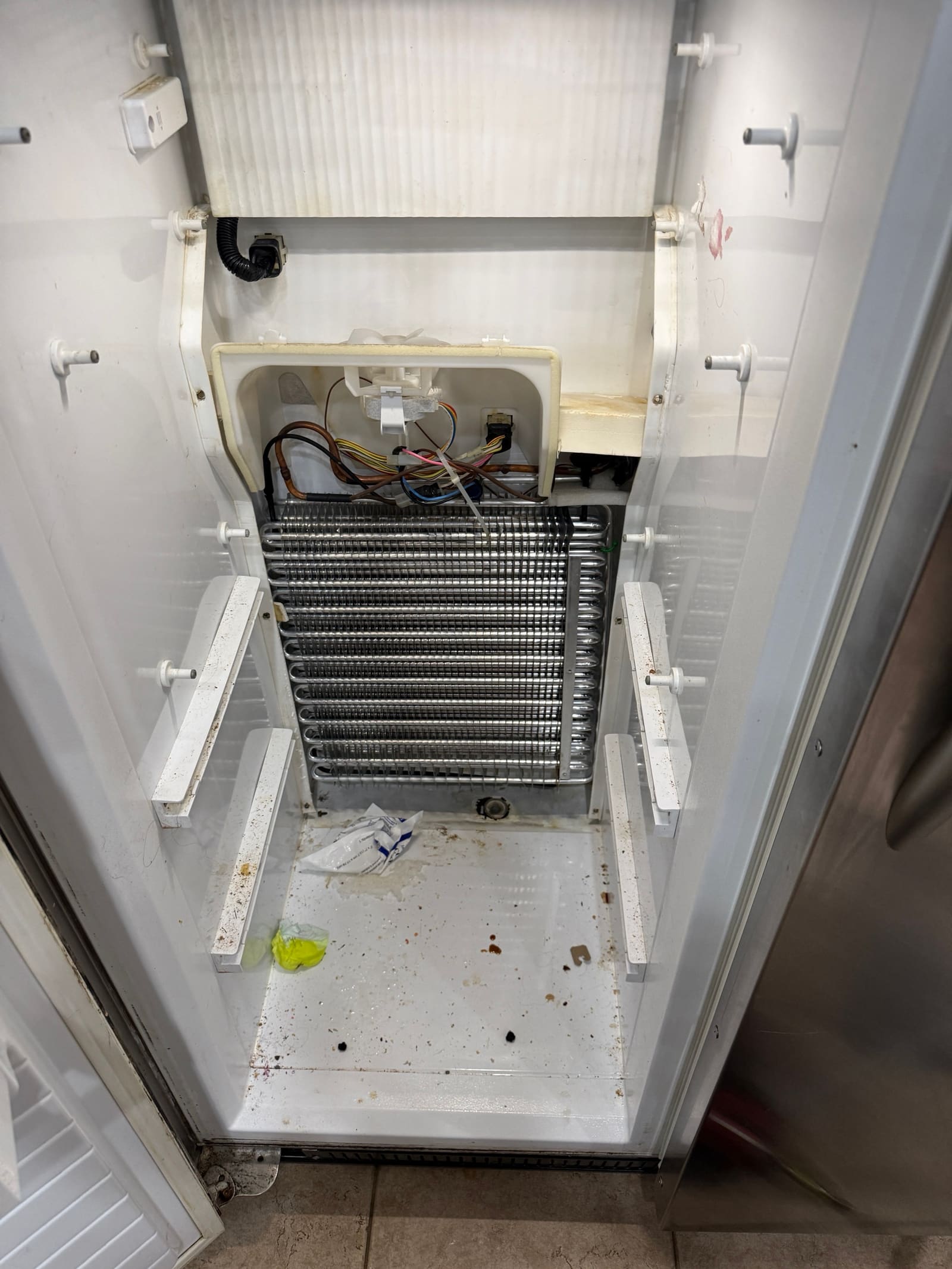
Connecting gauges confirmed it: the system pressure was low. The refrigerant was escaping somewhere.
A known weak spot on these refrigerators
On these KitchenAid built-ins, the evaporator is a very common failure point. The defrost heater runs along the bottom of the evaporator coil, and over years of heating and cooling cycles, the aluminum tubing rubs against it and gradually wears through in that contact zone. Once it wears a pinhole, refrigerant slowly leaks out and the fridge loses its ability to cool.
The video below shows the underside of the old evaporator, right where the defrost heater sits against the tubing — the area where these coils wear through.
Replacing the evaporator
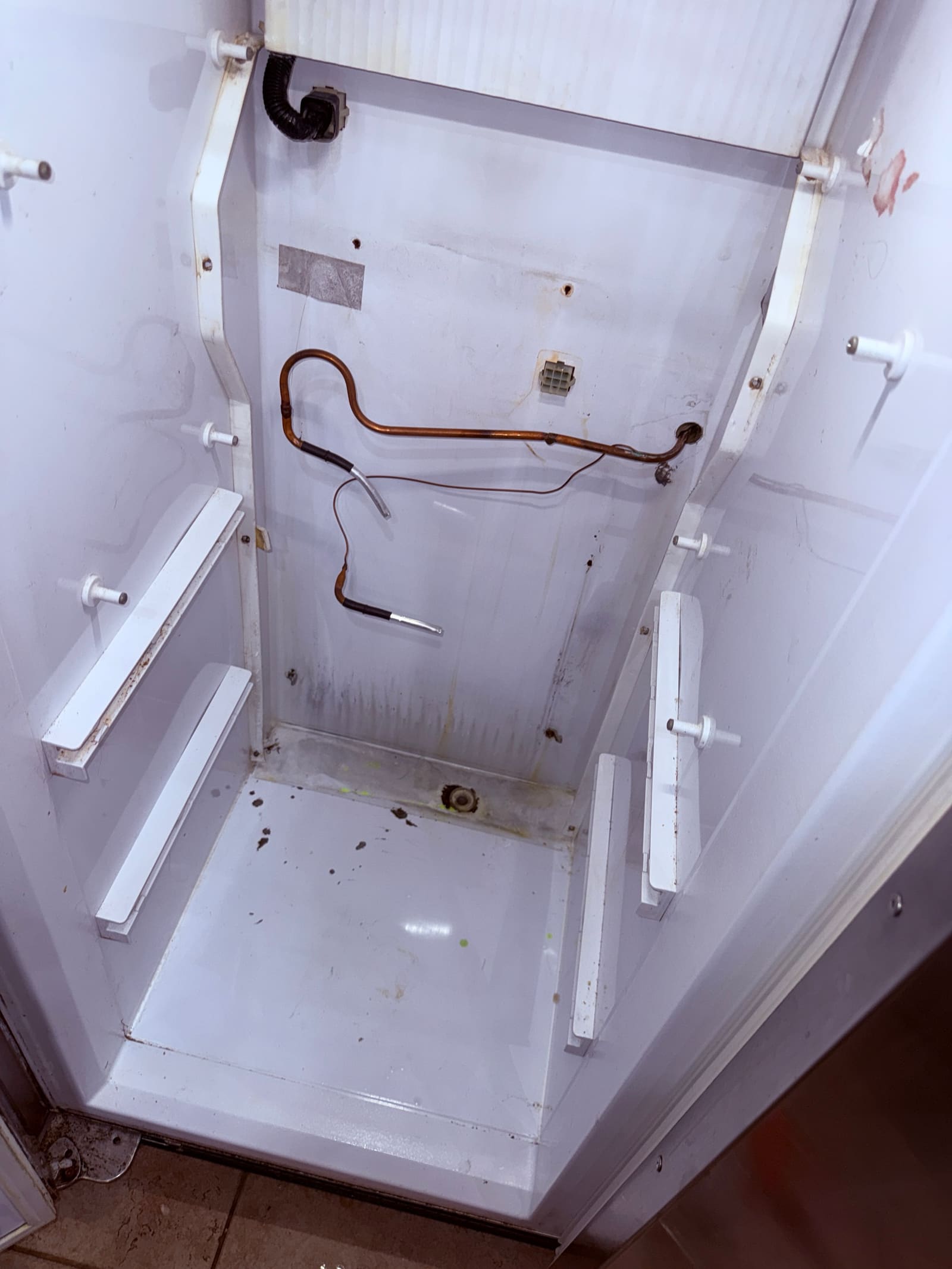
A new evaporator was ordered, and the repair was completed the next day. The old coil came out, leaving just the refrigerant lines in the freezer cavity.
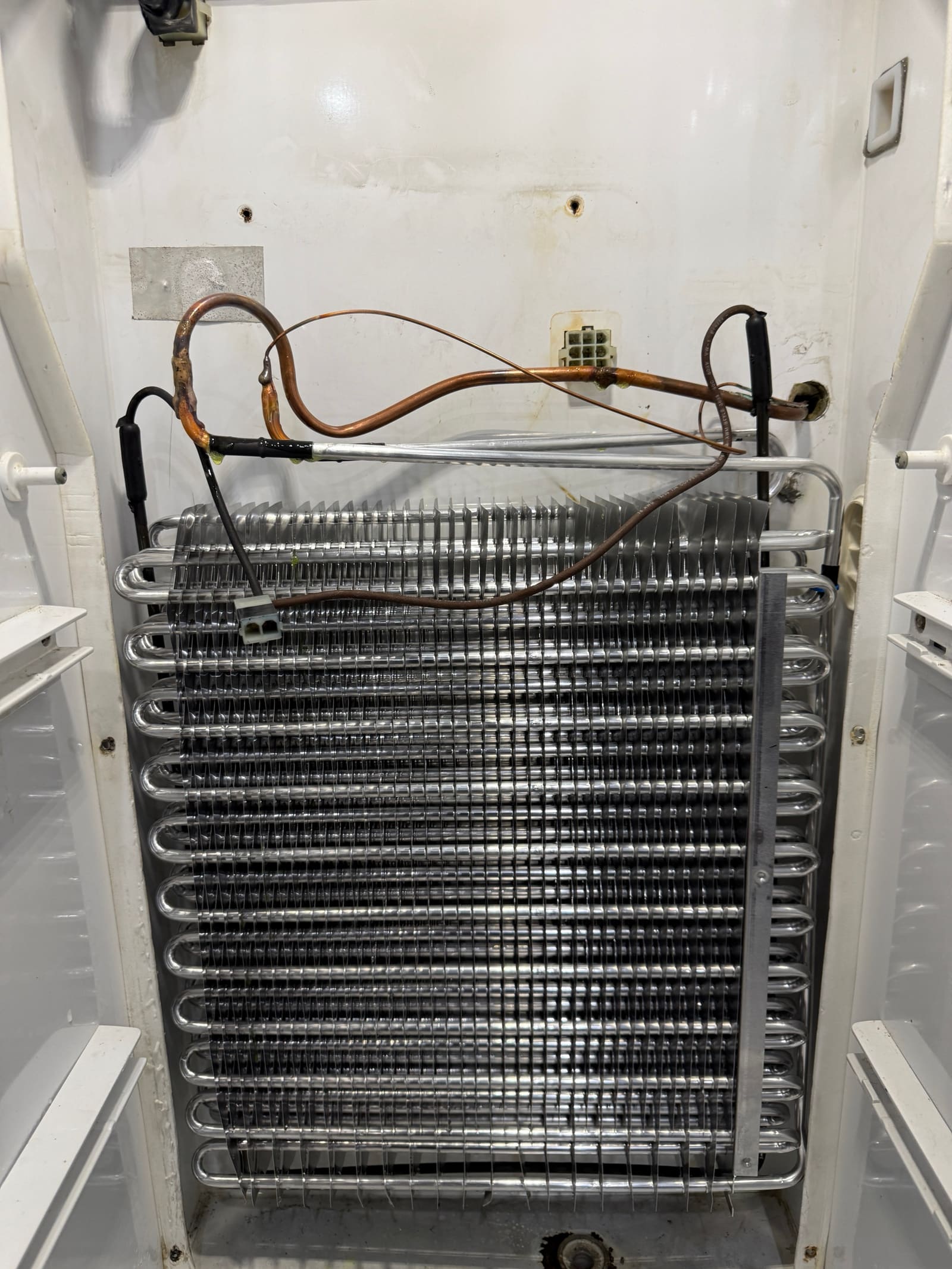
The new evaporator was then brazed into the sealed system. After that, the system was checked for leaks, evacuated, and recharged with the correct amount of refrigerant.
A little extra maintenance while we were there
Since the refrigerator is over 20 years old, we also cleaned the condenser coil — a dirty condenser makes the whole system work harder and shortens its life, especially right after a sealed system repair. The doors were lubricated as well so they open and close smoothly.
Result
The refrigerator is cooling properly again. There’s one more visit planned: the ice maker still works, but its coating is starting to peel, so it’s due for replacement, along with a new water filter. Update: that visit is done — see the ice maker and water filter follow-up.
If your built-in refrigerator’s fans and compressor are running but it still isn’t getting cold, the sealed system — and on these KitchenAid units, specifically the evaporator — is worth having checked. See our refrigerator repair page and high-end appliance repair page for more.
FAQ
Why is my KitchenAid built-in fridge running but not cooling?
If the compressor and fans run but the coil isn't cold, suspect the sealed system — on these units the evaporator often leaks.
Where do KitchenAid built-in evaporators leak?
Along the bottom, where the defrost heater touches the aluminum tubing and wears through over years of cycling.