Water on the Floor in Front of a GE Front-Load Washer in Trinity: A Piece of Wood in the Door Seal
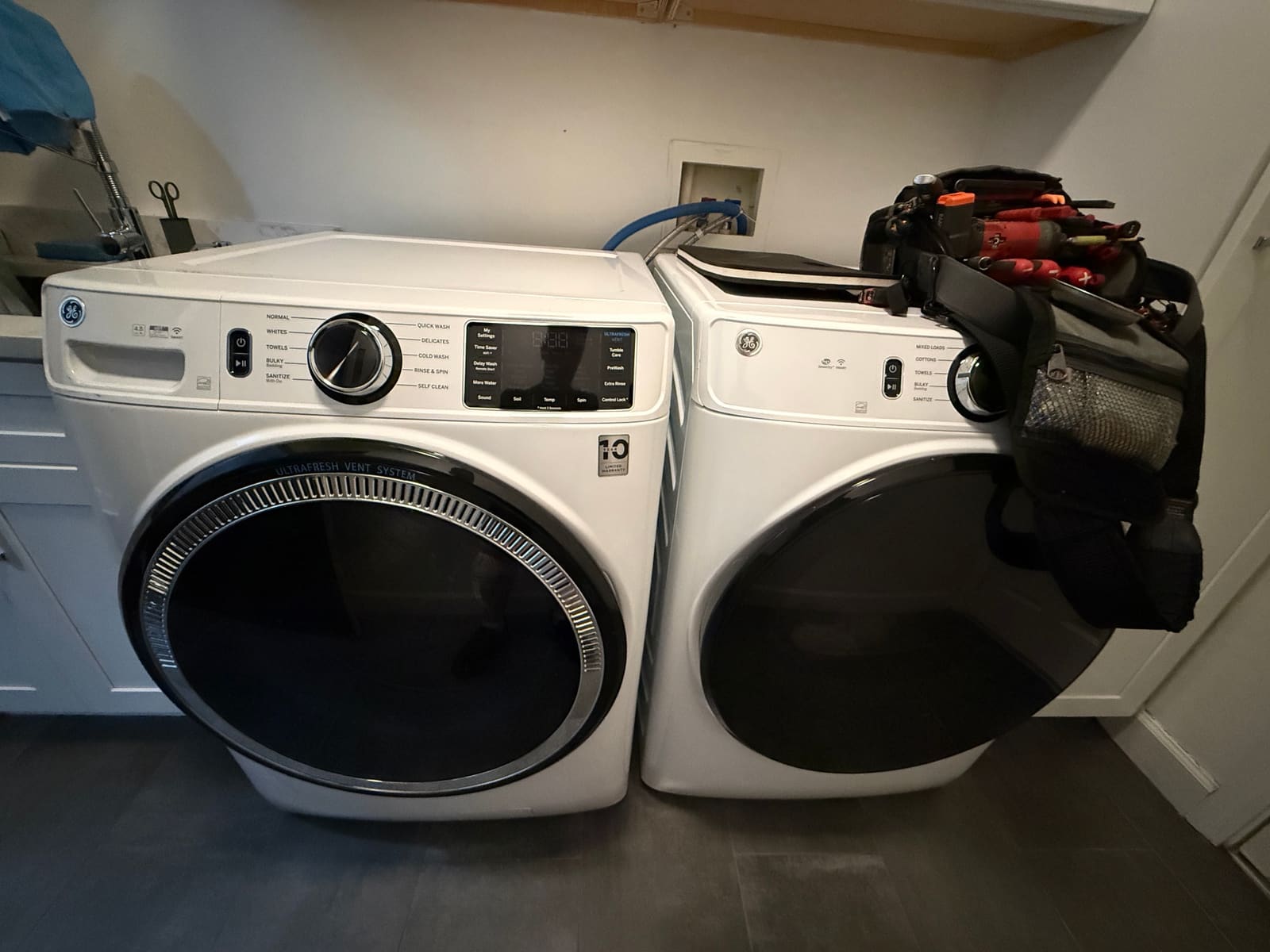
- Symptom
- The client found water on the floor in front of a GE front-load washer, along with small bits of wood and plastic.
- Cause
- A small piece of wood was stuck between the door and the rubber seal, and water ran out through the gap.
- Fix
- We removed the debris. Two full test cycles at the highest water level showed the washer itself was fine.
A client in Trinity called about water on the floor in front of their GE front-load washer (model GFW550SSN2WW). They also found small pieces of wood and plastic in the puddle, which turned out to be an important clue.
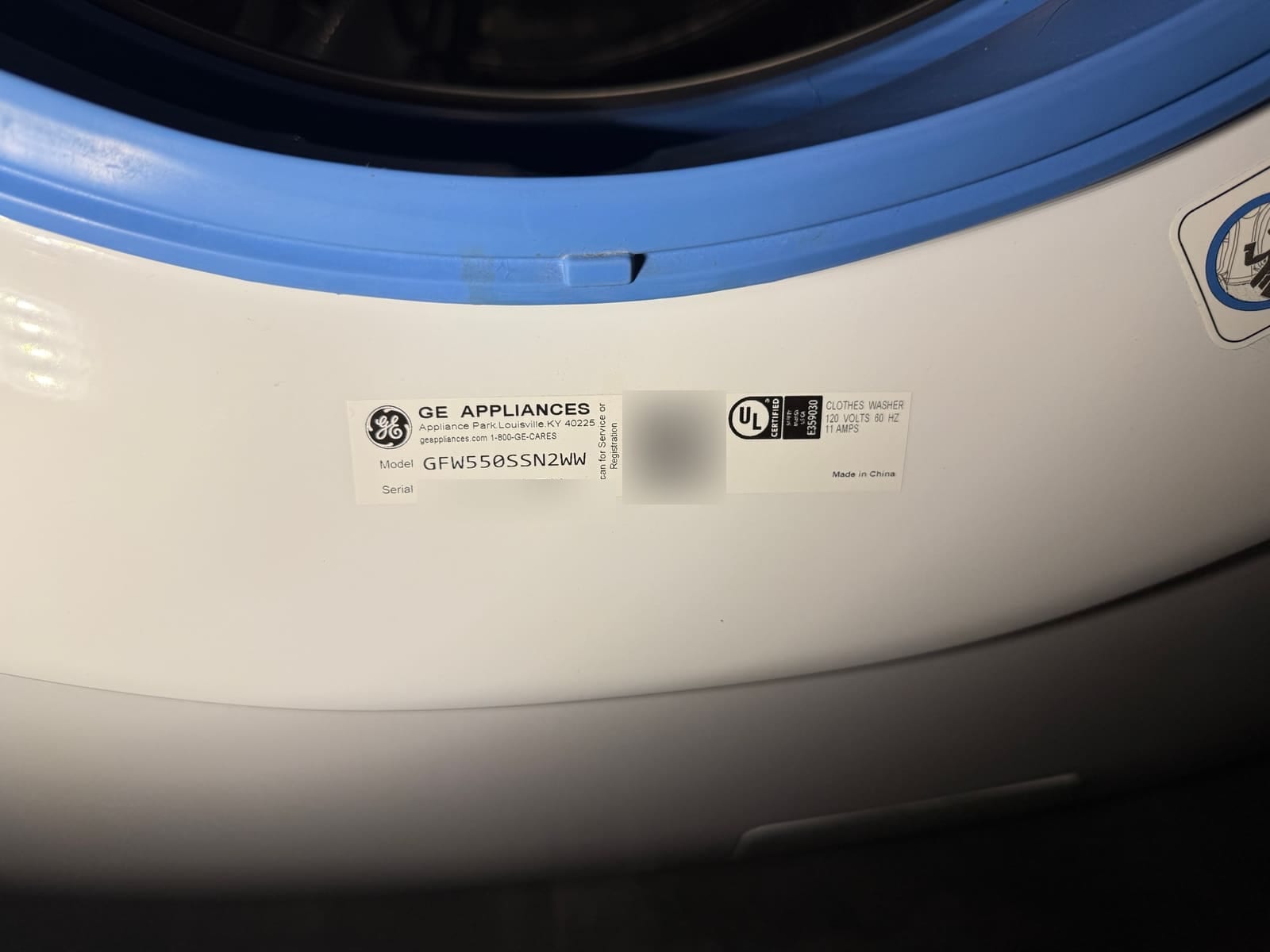
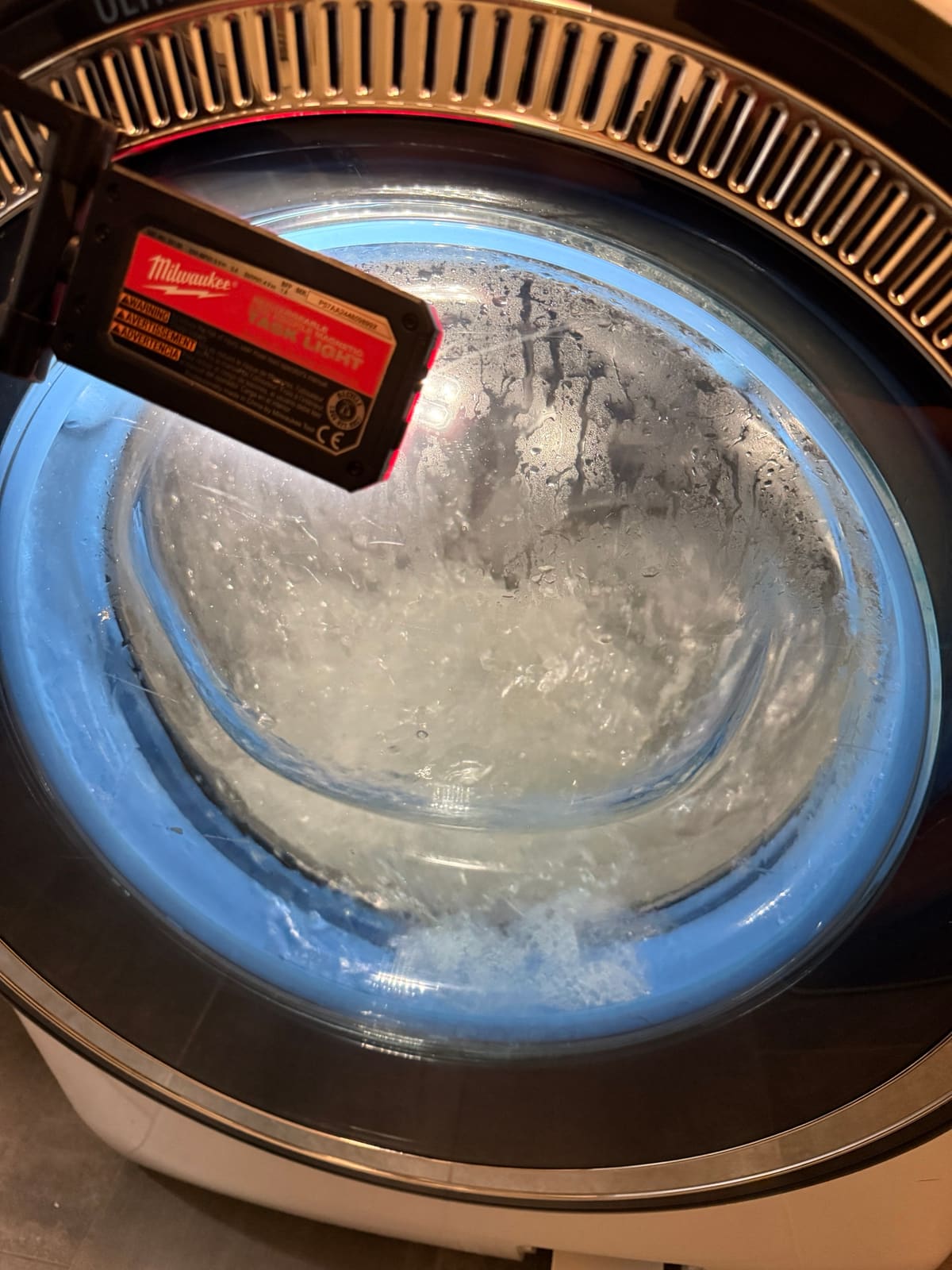
Run it and watch
We didn’t want to guess, so we ran the washer through two full cycles and filled it to the highest water level each time, watching for where water showed up.
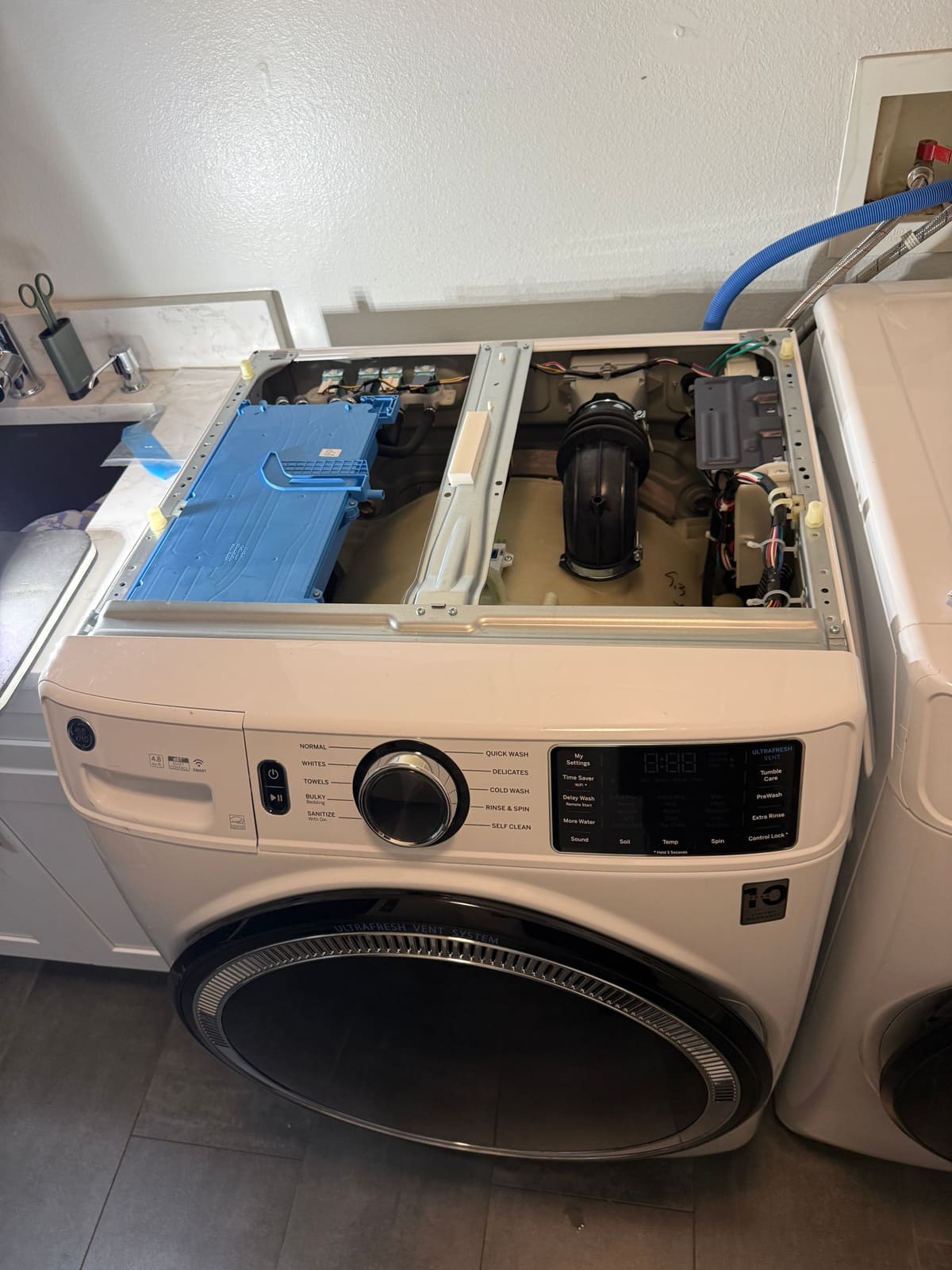
We also took the top off to look at the water lines and the rest of the plumbing from above.
A piece of wood in the seal
The washer itself was fine. The leak was at the door. A small piece of wood had gotten stuck between the rubber seal and the door, so the door couldn’t close tight. Every time the tub filled, a little water got out through that gap and ended up on the floor.
Debris like this can come in with the laundry. If a front-load washer starts leaking from the front, run your hand around the seal and look into the fold at the bottom first.
The tech sheet
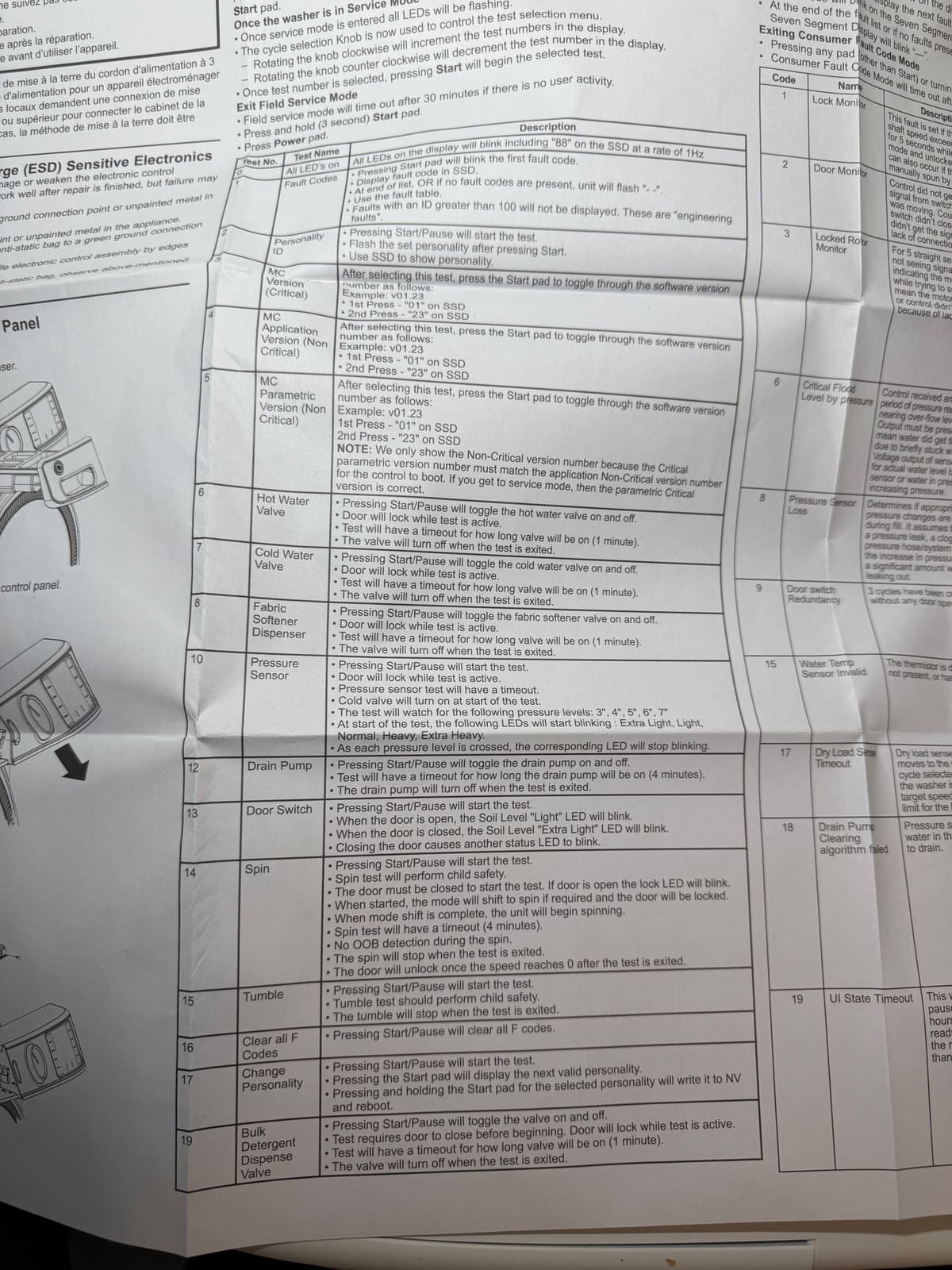
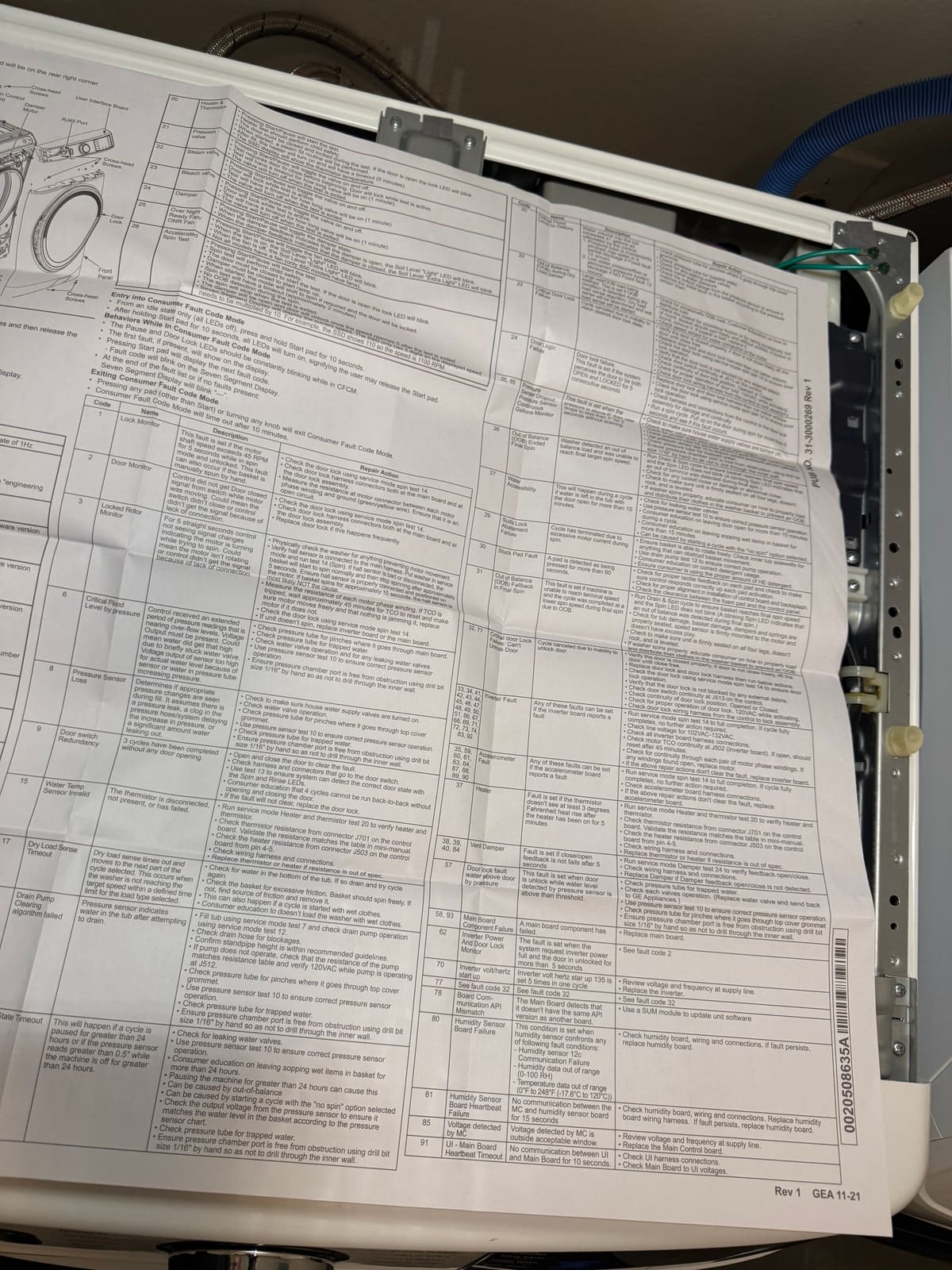
The washer still had its tech sheet, with the service mode tests and the fault code table. We typed it up on its own page: GE front-load washer service mode and fault codes.
More on our washer repair page.
FAQ
Why is there water in front of my front-load washer?
The most common spot is the door. If something gets caught between the glass and the rubber seal, such as a small piece of wood, plastic or a button, the door can't seal and water runs out the front.
How do you check where a front-load washer is leaking from?
We run a full cycle with the highest water level and watch the seal, the door, the hoses and the pump area while it fills. If nothing leaks, we run it a second time before we call it fixed.