KitchenAid Oven Slow to Heat in Westchase: A Burned-Through Hidden Bake Element
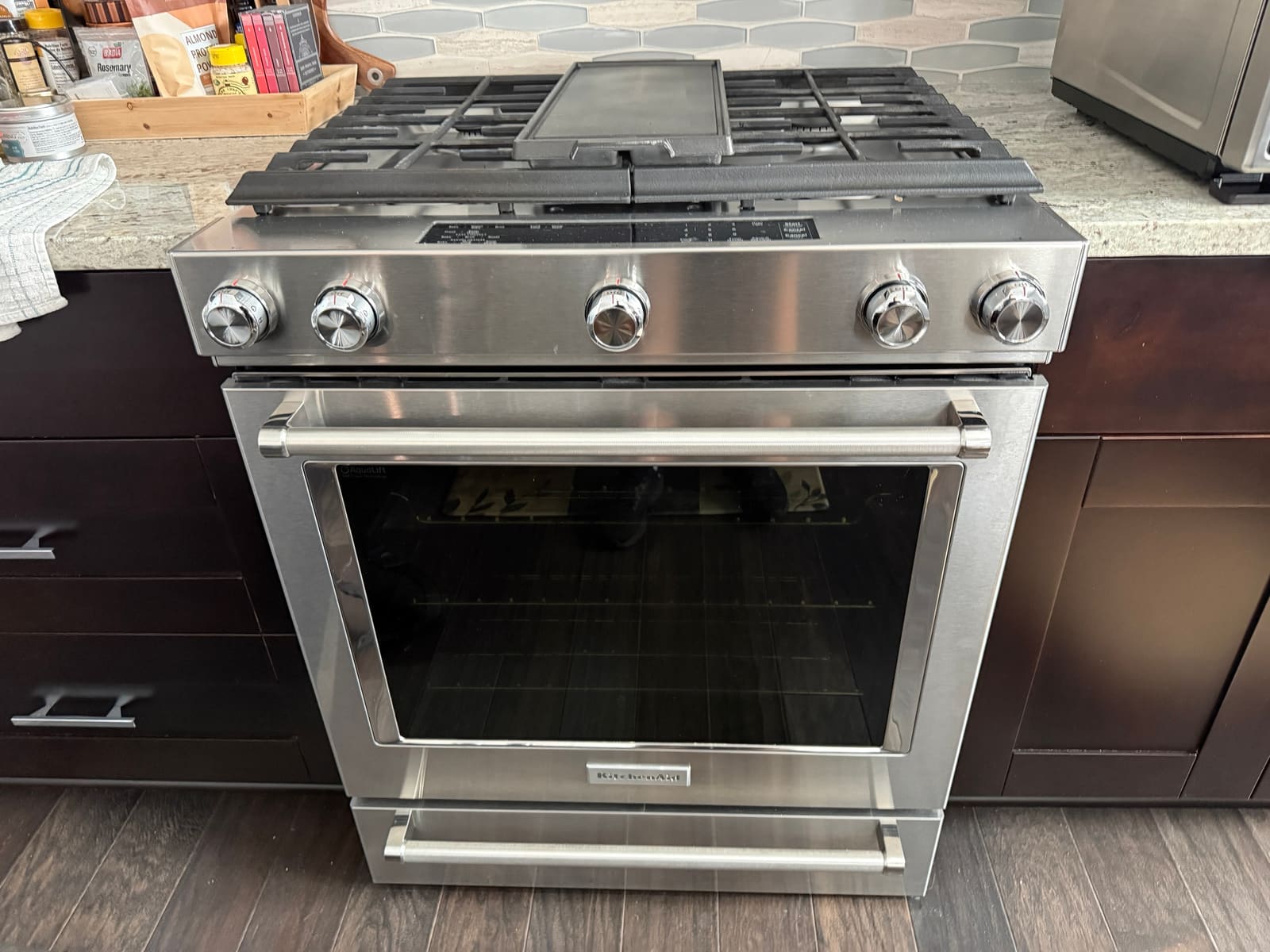
- Symptom
- The oven on a KitchenAid dual fuel range was taking a long time to heat up.
- Cause
- The bake element, hidden under the oven floor, had burned through and wasn't working at all.
- Fix
- We ordered a new Whirlpool factory bake element, took out the door, racks and oven floor panel, and replaced it.
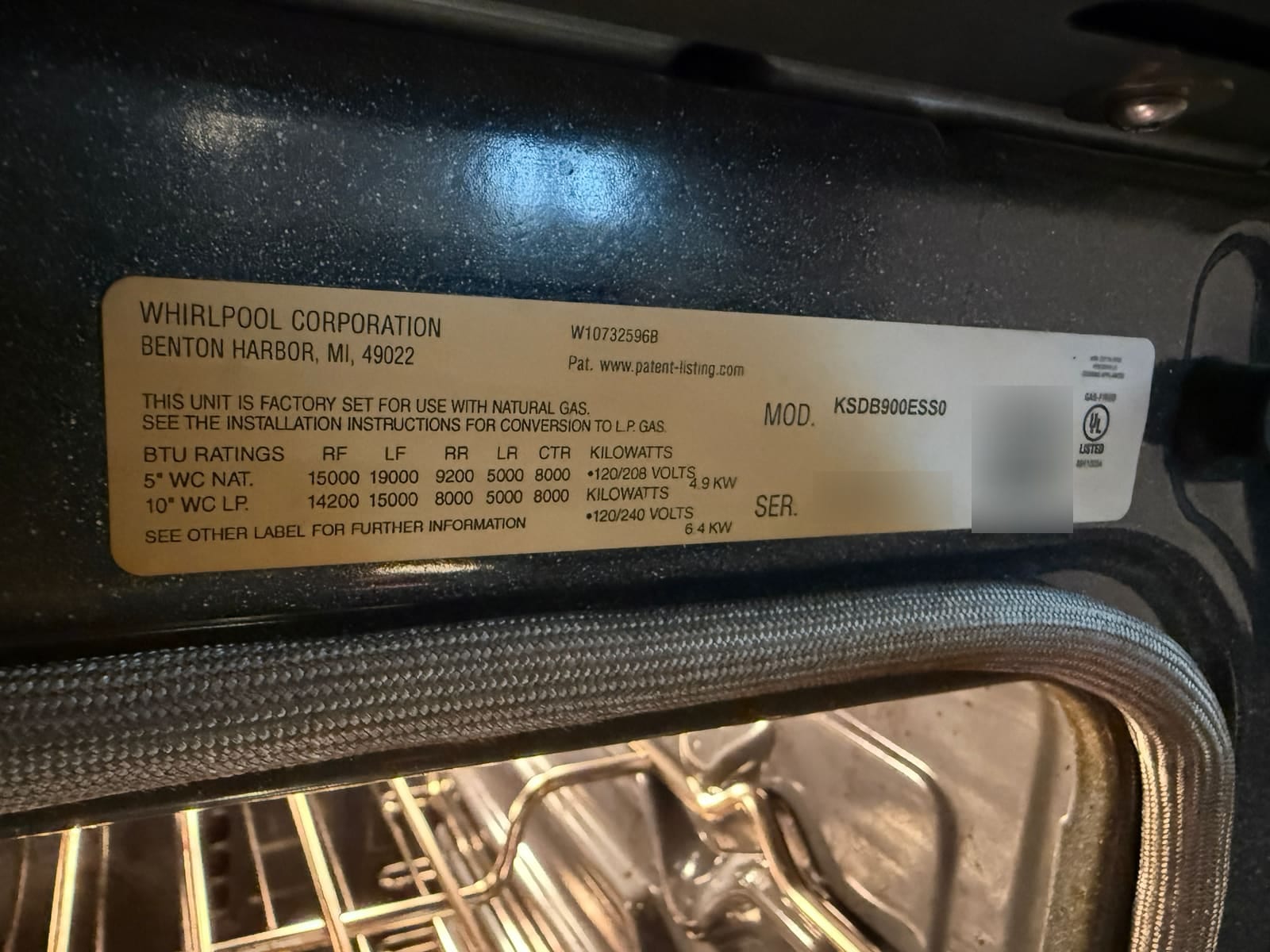
This KitchenAid slide-in range in Westchase has gas burners on top and an electric oven below (model KSDB900ESS0). The complaint was that the oven took a long time to heat up.
The element you can’t see
On this range the bake element isn’t sitting in plain view at the bottom of the oven. It’s hidden under a smooth floor panel, which makes the oven easier to wipe out but means you can’t just look down and spot a bad element.
To get to it, we unplugged the range, took off the oven door and pulled out all the racks.
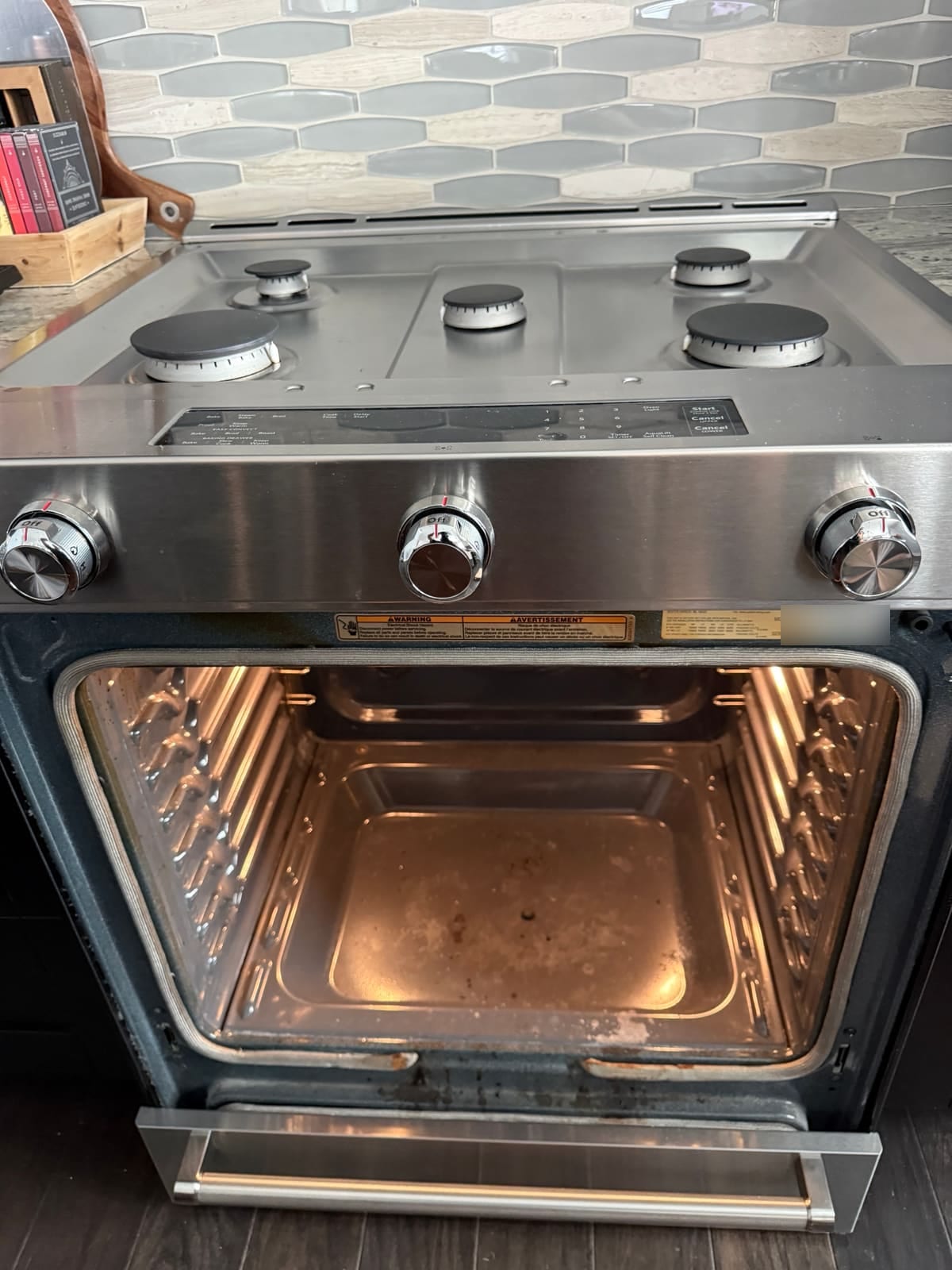
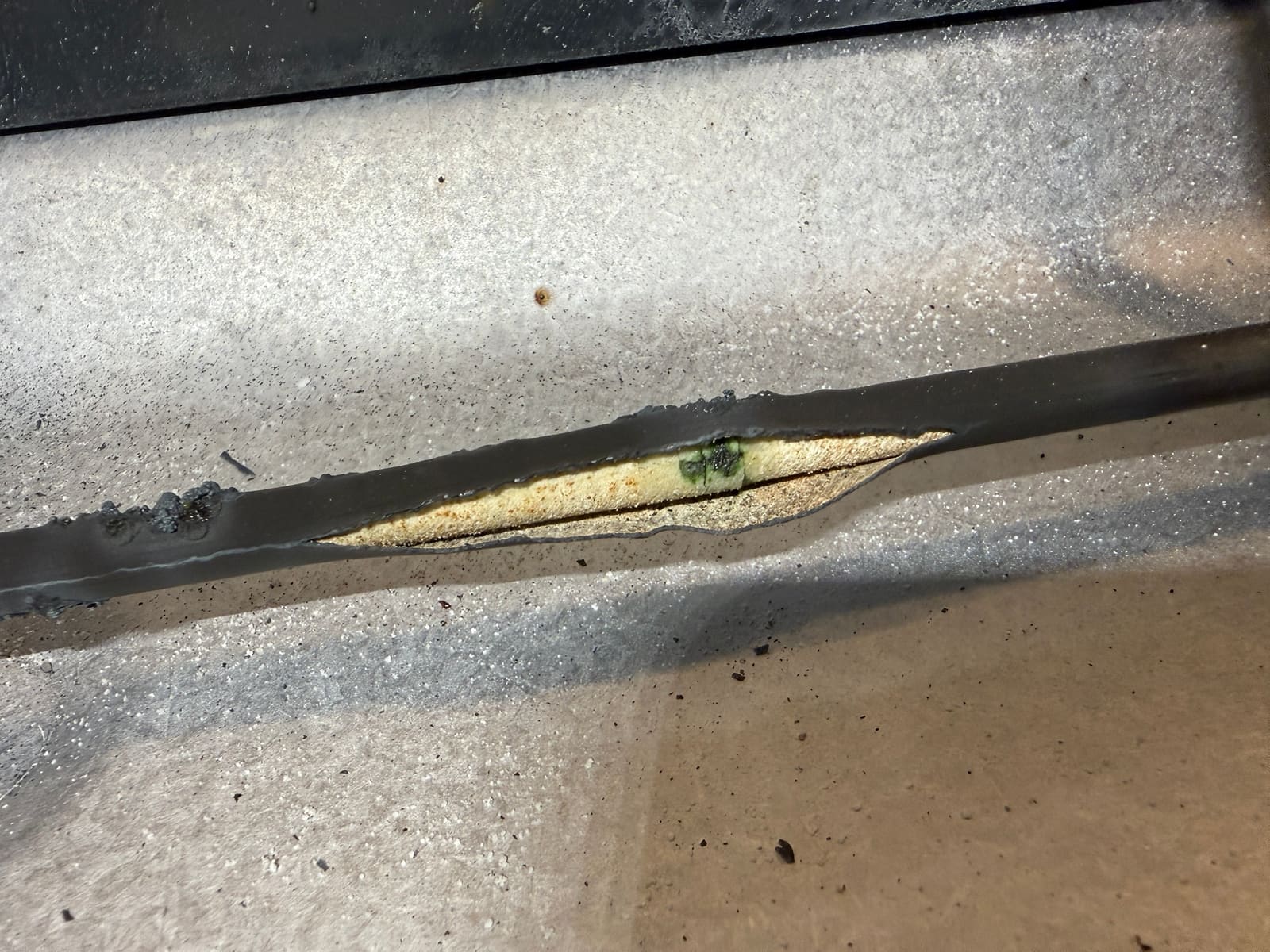
With the floor panel out, the problem was right there. The element had burned through near the back.
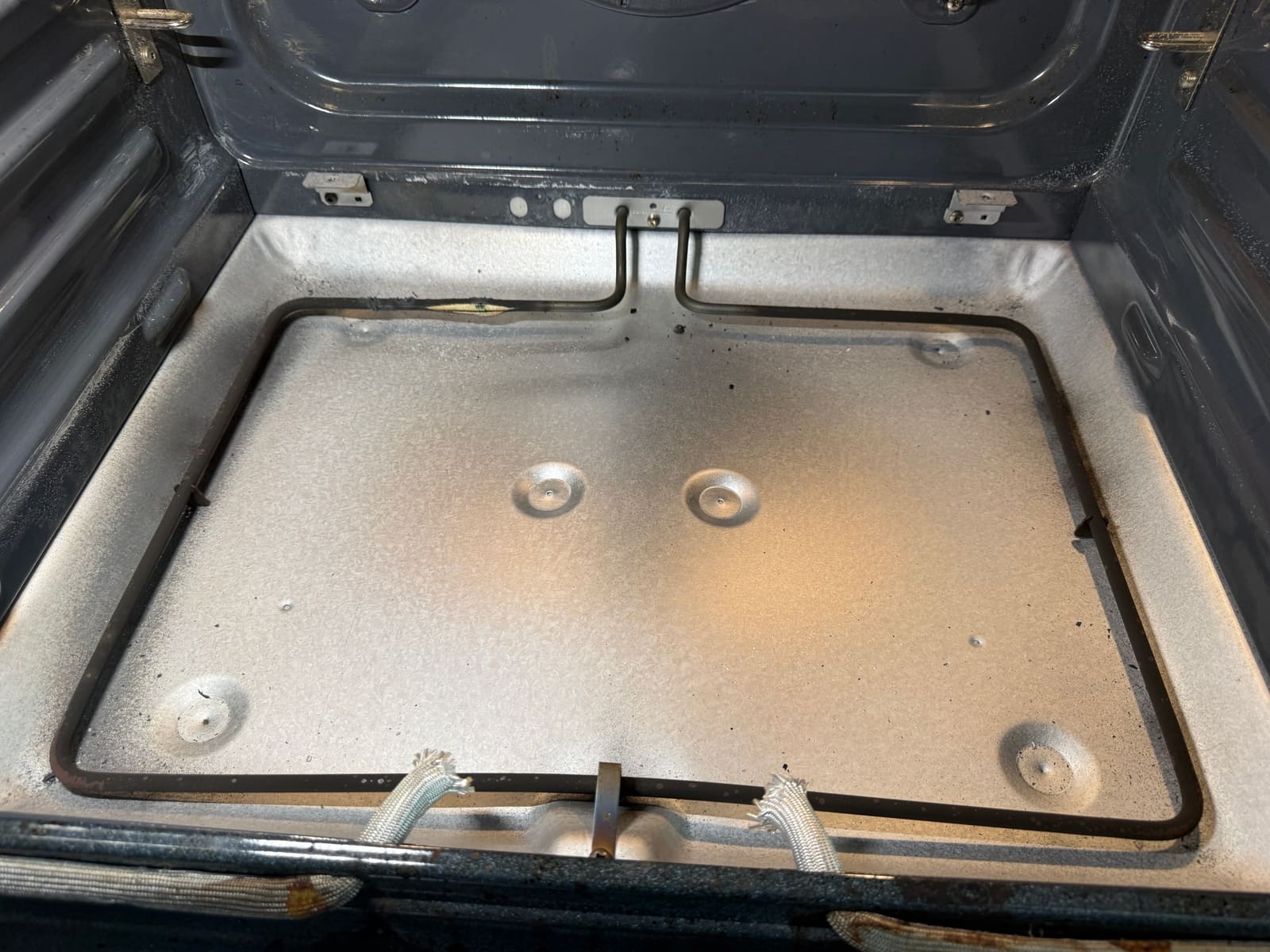
Up close you can see the outer sheath split wide open and the insulation inside. An element like that doesn’t heat at all. The oven was still getting some heat from its other elements, which is why it warmed up, just slowly.
Replacing it
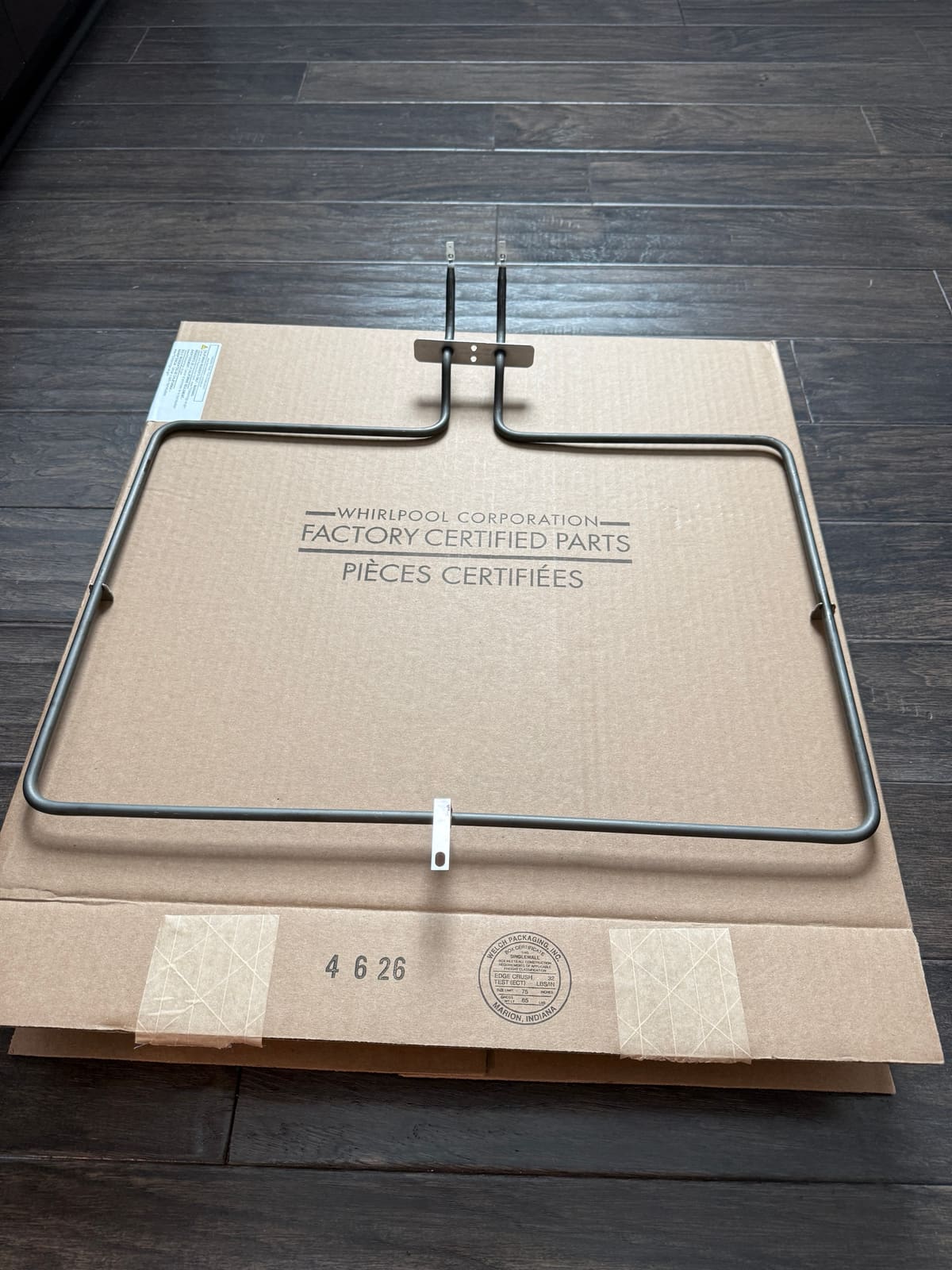
We ordered a new Whirlpool factory element for this range.
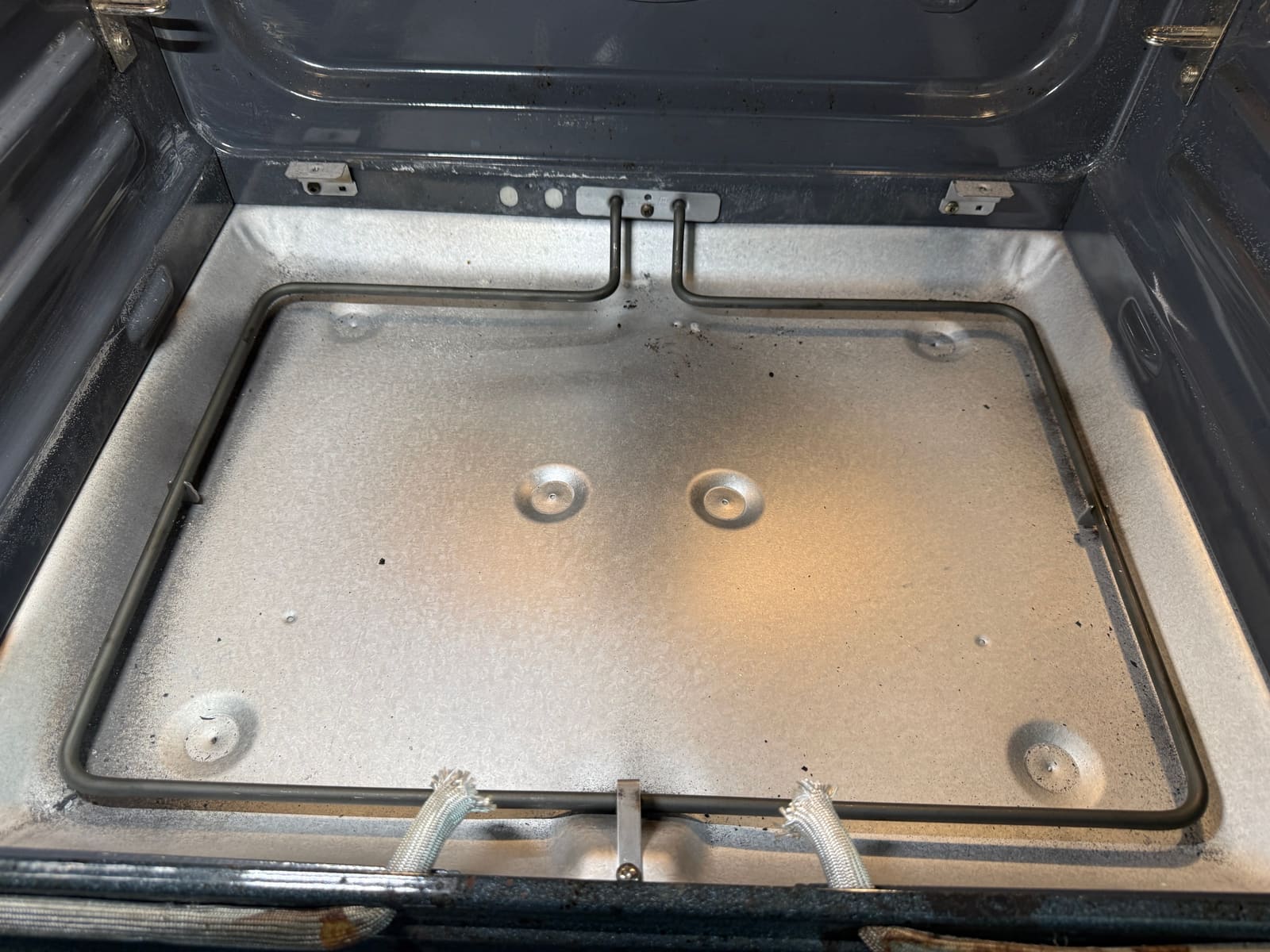
The element is held by a plate at the back wall and a bracket at the front. We unscrewed both, pulled the terminals through, moved the wires over to the new element and screwed it in place. Then the floor panel, racks and door went back in.
If your oven is slow to preheat and you have a smooth oven floor, the bake element underneath is a likely suspect, even though you can’t see it. Our oven repair page covers more of what we fix.
FAQ
Why is my oven taking so long to preheat?
A common reason is a dead bake element. The oven still gets some heat from its other elements, so it warms up, just much slower than it should.
Where is the bake element on a KitchenAid range with a smooth oven floor?
It's hidden under the oven floor panel. To get to it, we take out the racks and door, lift out the floor panel, and unbolt the element from the back wall.